Saturday, October 10, 2015

Breed Profile: Bernese Mountain Dog


The Bernese Mountain Dog is a large-sized breed of dog. They are originally kept as a farm dog. In the past, they were used to pull carts. They are recognized in the working breed group. They are outdoor dogs at heart, they can make a good house dog, but they live for the outdoors. They need lots of exercise, if they don’t, they might be a barking and harassing dog. They are patient dogs and take well to children. They have a very calm temperament. They can live up to 7-8 years.

Wednesday, October 7, 2015

Breed Profile: Chesapeake Bay Retriever

      The Chessie is a well-balanced, muscular, medium sized dog. The Chessie, much like other retrievers, is breed to hunt. The Chessie is often know for its love of water and ability to hunt. The Chessie has a similar appearance to the Labrador Retriever. The Chessie is an intelligent breed and learns things very quickly. The Chessie is very willing to work and can be protective of his family.

Sunday, October 4, 2015

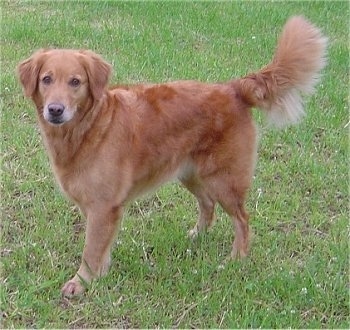
Breed Profile: Golden Retriever

  The Golden Retriever is a strong, balanced, and active dog with a great personality. They are a large sized breed bred to retriever shot waterfowl. They are a trustworthy dog, and are very loyal. They are a strong, muscular dog. They are an easy breed to train basic and advanced training. They love to hunt and are a great field dog. They are a great family pet, good with children. They need fairly regular grooming, they do shed year round. They are used for guiding the blind, hearing for the deaf, hunting dogs, and search and rescue. They are the 3rd most popular family dog breed in the United States, 5th in Australia, and 8th in the United Kingdom.

Tuesday, September 29, 2015

Breed Profile: Labrador Retriever

The lab originated in Canada. A lab is a type of gun dog. Labs are athletic, playful, and a very popular breed in Australia, Canada, The United States, and the United Kingdom. Labs are also frequently trained to aid the blind and assist people with autism. They are a prized waterfowl hunting dogs. Labs coats are smooth, short, dense, an straight.

Saturday, March 7, 2015

19 tables foods you give your dog: How bad are they really?(continued)
#7. Jerky: BAD
Repeated ingestion of "fatty, high-sodium, or high-sugar human foods" eventually "causes many pets to be reluctant to eat their well-balanced dog food diet".
#8. Hot Dogs: BAD
Hot dogs contain artificial ingredients, nitrates, chemicals, and preservatives, none of which can be adequately broken down or eliminated by a dog's digestive system.
#9. Rice: Good
Brown rice is better than white rice, since it retains all its native nutrients, including vegetable proteins.
#10. Carrots: Good
As a source of vitamin A and appropriate dietary fiber, carrots present no problems to a dogs occasional treat.
#11. Pickles: BAD
The corn syrup  offers nothing but empty calories, and onions can disturb the normal function of your dog's red blood cells, depriving them of oxygen.
#12. Popcorn: Not So Good
Air-popped and unseasoned, popcorn is OK for dogs, but not so much when you lather on the butter and salt.

Saturday, February 28, 2015

Sweet Potato Strips
(or chunks if you aren't good at slicing). Preheat your oven to 250 degrees F. Slice the sweet potato into strips, chunks, whatever you want, and place on a cookie sheet. Drizzle with olive oil, add a dash of cinnamon, then cook for 2 1/2 hours. These can be frozen for about four months so don't be afraid to make a big batch of them.
Cheese Bones
Ingredients:
2 cups wholewheat flour
1/2 cup low-fat cheddar cheese, shredded
1/2 cup vegetable oil
1/4 cup water
Directions:
In a large bowl, mix all the ingredients. Knead the dough on a floured surface. Roll out the dough to 1/2 inch thickness, and cut out shapes with a dog bone cookie cutter. Put the cookies on a baking sheet, 1/2 inch apart. Bake at 400 degrees for 10 to 15 minutes. When done, the cookies should be firm to the touch. Turn the oven off and leave the cookies in for 1 to 2 hours to harden.
I will give you 6 more after a little. I will just have these ones for right now.

19 Table foods you give your dog: How bad are they really?
#1. Steak: Not so good
Feeding your dog bits of fat that you trim from the steak, can lead to occasional vomiting and loose bowels. 
#2. Ham: Not so good
All the typical methods to doing ham are the things that make it not so good for your dog.
#3. Bacon: BAD
The fat and grease in bacon can lead to clogging arteries when your dog grows older.
#4. Salmon: De-boned and cooked, good. Raw, bad
Salmon can carry intestinal parasites, should a dog get a hold of a raw salmon you should contact a vet immediately.
#5. Stuffed Seasoned Turkey: Not so good
Giving your dog the skin and other parts are too greasy and can lead to diarrhea, and heart problems.
#6. Fried Chicken: BAD
Feeding your dog fried chicken only exposes them to digestive upset in short-term, and to long-term problems.